Lightweight AI for On-Device & Medical Vision Intelligence
Research-driven deep learning systems designed for real-world deployment across medical imaging and general low-resource vision applications.
What is Lightweight-AI?
Lightweight-AI is a research platform focused on developing efficient, deployable deep-learning systems that operate under strict constraints on memory, computation, and power.
While ophthalmology serves as a primary validation domain, the underlying architectures and training strategies are modality-agnostic and applicable to a wide range of medical and non-medical image analysis tasks.
The platform emphasizes practical AI — models that can run locally, offline, and reliably in real-world environments.
Core Focus Areas
🩺 Medical Imaging AI
AI-based image analysis across ophthalmology, radiology, pathology, and related biomedical imaging domains. Ophthalmology serves as a flagship validated use case.
📱 On-Device AI
Deep-learning models optimized for execution on CPUs, Jetson platforms, and embedded systems without cloud dependency.
🧠 Lightweight Architectures
Efficient neural designs minimizing latency, memory footprint, and energy consumption while maintaining performance.
🧩 General Vision Intelligence
Image denoising, segmentation, feature extraction, and quality assessment for non-medical and cross-domain applications.
Key Technology Features
-
Scientifically Validated Lightweight Model Design
Core segmentation models are derived from lightweight architectures reported in Scientific Reports (2022), achieving accurate anatomical segmentation with significantly reduced parameters and memory footprint compared to conventional deep networks. -
Memory-Efficient Inference Under Strict Constraints
Models are designed to operate within limited RAM budgets, enabling multiple networks to remain resident in memory simultaneously without dynamic loading or GPU acceleration. -
Reliability-Oriented Outputs for Screening Use
Predictions include confidence-aware outputs and structural measurements, supporting screening and triage rather than opaque binary decisions. -
CPU-Only and Edge-Compatible Execution
All inference pipelines are optimized for standard CPUs, reflecting realistic on-device and edge deployment conditions. -
Modality-Agnostic Architectural Principles
Although validated primarily on ophthalmic images, the underlying design strategies are applicable to general medical and non-medical vision tasks.
AIGS Network — Reference End-to-End Screening System
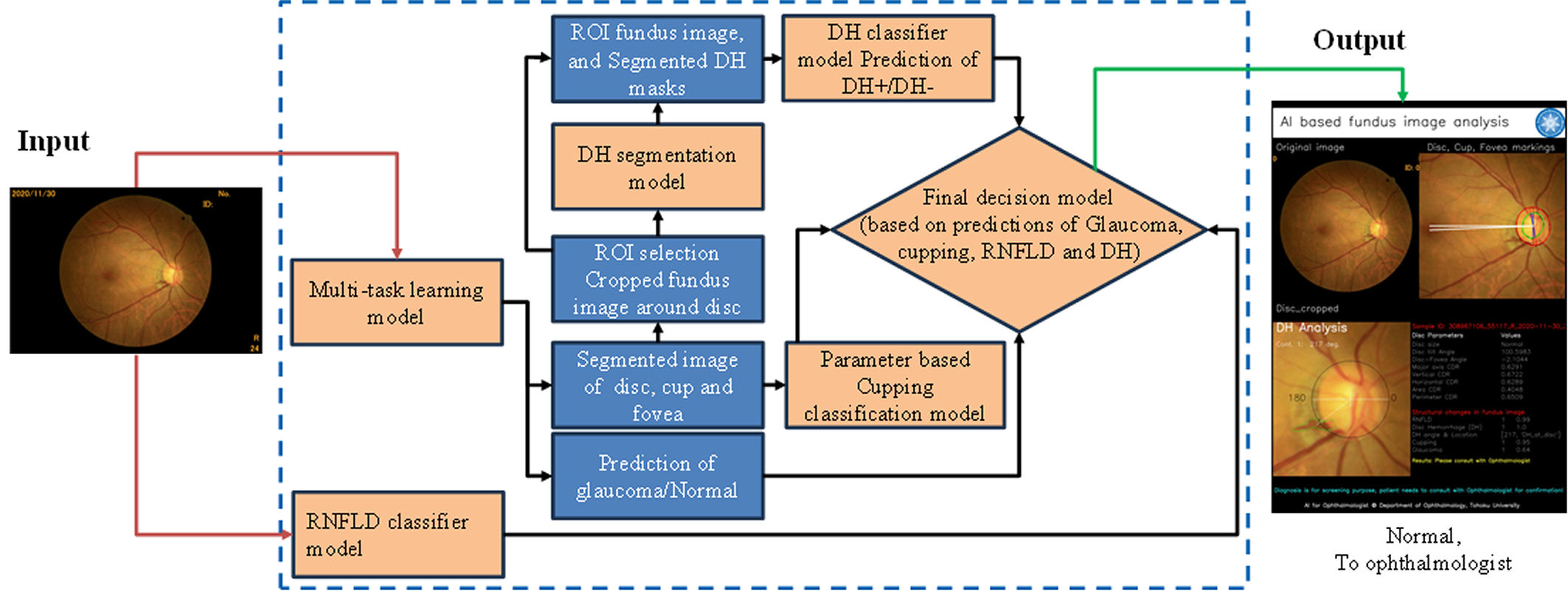
Figure 1. Block diagram of the AI-GS network, integrating segmentation, classification, and feature fusion in a lightweight pipeline. npj Digital Medicine (2025)
The AI-GS network is a hybrid multi-model deep learning system that mirrors key components of a clinical glaucoma screening workflow. It integrates multiple lightweight models to extract structural and disease-relevant indicators from fundus images.
Rather than relying on a single classifier, AI-GS combines segmentation and classification models to evaluate optic disc cupping, disc hemorrhages, and nerve fiber layer changes — early markers of glaucoma progression.
Raw fundus images are preprocessed and regionally cropped. Quantitative structural measurements and probabilistic predictions are fused to generate a final screening decision, improving robustness and sensitivity compared with standalone approaches.
Lightweight Deep-Learning Architecture
This model implements a multi-task learning (MTL) architecture in which a single lightweight backbone simultaneously performs anatomical segmentation and disease-related prediction from a fundus image. Shared feature representations are learned to segment key structures such as the optic cup, optic disc, and fovea, while also estimating glaucoma-related risk.
By jointly optimizing segmentation and classification objectives, the network encourages anatomically consistent feature learning, improving robustness and interpretability compared with single-task models trained in isolation.
The multi-head output design allows structural measurements and disease predictions to be generated within a unified inference pass, reducing computational overhead.
The architecture is intentionally compact and parameter-efficient, enabling reliable inference under constrained memory and CPU-only environments, consistent with the on-device deployment goals described in the study.
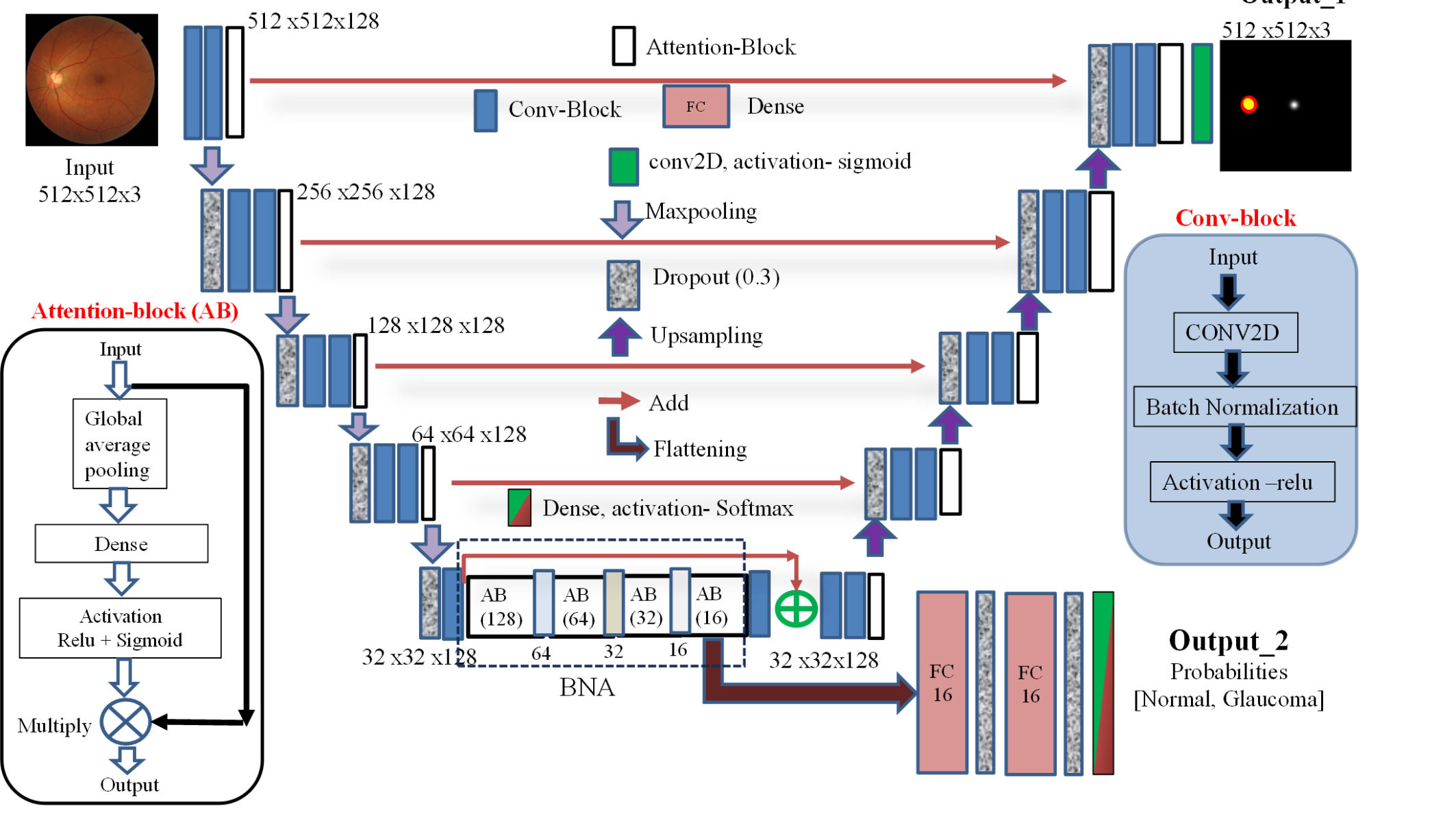
Figure 2. Modular architecture combining segmentation and classification to support robust glaucoma screening.
Research & Publications
For researcher background, affiliations, and publication history, see About the Researcher.
Patent Information
Some methods demonstrated on this website are described in peer-reviewed scientific publications and are also related to patented research work. Publication of these methods does not imply free or unrestricted use.
These demonstrations are provided strictly for research and educational purposes. No license or rights to patented technology are granted or implied.
Patent No: WO2023062764A1
Inventors: Toru Nakazawa & Parmanand Sharma
Year: 2023
Live Demonstrations
Lightweight-AI can be used as a research framework, a deployment-ready inference engine, or a foundation for building domain-specific vision applications.
All live demonstrations operate on a CPU-only server with 4 GB RAM (including the operating system). Multiple lightweight models (approximately nine: 6 for AI-GS and 1 for each app) are kept resident in memory at all times rather than being loaded on demand. This setup reflects realistic on-device and edge deployment scenarios, emphasizing memory efficiency and low-latency inference under constrained resources.
🩺 Medical & Biomedical AI
-
AI-Based Glaucoma Screening (Clinical)
Population-level screening from fundus images
https://aigs.lightweight-ai.com -
RGC Analysis (Pathological AI)
Retinal ganglion cell detection and counting for disease analysis
https://rgc.lightweight-ai.com -
Vessel AI (Biomarker Segmentation)
Feature-level vessel extraction and quantitative analysis https://vessel.lightweight-ai.com
🧠 Core Vision & On-Device AI
-
AI Image Denoising (General Vision)
Noise-robust restoration for medical and non-medical images
https://denoise.lightweight-ai.com -
On-Device Vision Processing
CPU-only and embedded inference (Jetson / edge devices) -
Lightweight Segmentation & Classification
Modular architectures reusable across domains